
COUPLES THERAPY SESSIONS
Every long-term relationship has its ups and downs, and daily pressures can place a strain on even the strongest of partnerships.
Couples therapy, also known as ‘marriage counseling’, is a structured form of psychotherapy specifically designed for couples seeking to strengthen or repair their relationship. It can help partners resolve conflicts, improve communication, and address issues around trust or infidelity that may be affecting their relationship. Therapy can also help couples navigate important life transitions, such as those involving parenting or career shifts, in a safe, neutral environment.
Building healthy foundations is essential for sustaining a strong relationship. Whether you’re feeling emotionally distant, facing major life changes, or coping with intimacy issues, a couples therapist can support you through difficult times, helping you meaningfully reconnect with your partner.
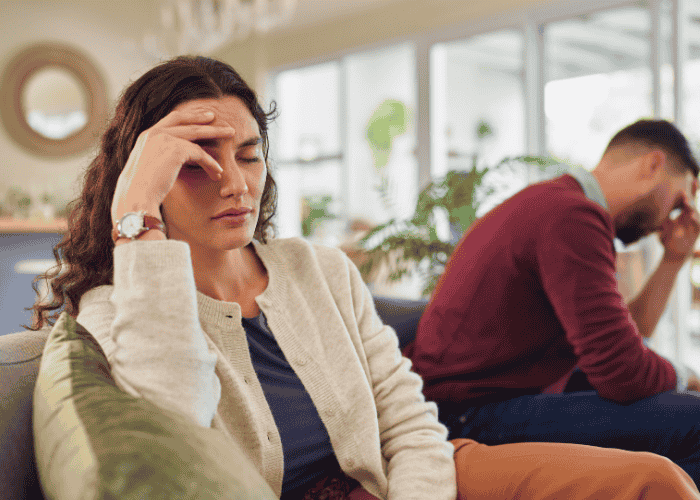
COUPLES COUNSELING: WHAT HAPPENS IN COUPLES THERAPY AND WHY IT WORKS
Some of the key elements of couples and marriage therapy include the following:1,5
IDENTIFYING NEGATIVE PATTERNS
A therapist can help you identify dysfunctional behaviours, such as defensiveness, stonewalling, or constant criticism, and learn how to replace these with healthier patterns of behaviour.
IMPROVING COMMUNICATION SKILLS
Couples therapy for communication issues offers a safe environment to learn how to listen to your partner and express your emotions more openly and constructively. It can help you resolve conflicts and strengthen your connection.
NEUTRAL MEDIATION
Importantly, a couples therapist doesn’t ‘take sides’. They act as a neutral mediator, helping all partners feel equally heard and understood.
EXPLORING DEEPER ISSUES
Therapy for trust issues in a relationship may reveal that frequent arguments about seemingly trivial things are actually rooted in deeper insecurities or unmet needs. Addressing these issues with compassion and empathy can have a positive impact on your relationship.
RECONNECTION AND UNDERSTANDING
Couples therapy for emotional disconnection can offer a space designed to encourage empathy, improve understanding, and foster emotional intimacy. This allows you to either strengthen bonds or determine whether the relationship can be repaired.
HOMEWORK AND PRACTICE
Counseling for relationship problems often includes an element of homework to continue progress outside of sessions.
WHEN SHOULD COUPLES GO TO THERAPY?
- Having trouble expressing your feelings to each other
- Finding yourselves constantly arguing
- Communication breakdowns becoming a regular occurrence
- Experiencing infidelity, abuse, or a breach of trust within the relationship
- Feeling emotionally disconnected from your partner
- Major life transitions causing ripples in your relationship
- Feeling ‘stuck’ or unsure how to move forward
Considering separation
The goal of couples or marriage counseling for conflict is to improve communication, build empathy, and create positive, lasting change. With the right support, you can begin to turn challenges into opportunities for growth and connection.
HOW TO CHOOSE A COUPLE'S THERAPIST
Choosing the right relationship counselor can influence your experience of couples therapy. Considering the following factors may help when choosing a couples therapist:
- Credentials: Ensure they are a licensed therapist with professional memberships, experience, and qualifications, such as being accredited by the BACP or HKSCP or being registered with the HCPC.
- Specialisms: It’s best to look for a therapist or marriage counselor with specialist couples training in addition to their individual training.
- Neutrality: A good couples therapist will find ways to treat both partners evenly so that no one feels consistently sided with or against.
- Disagreement management: Some couples repeat the arguments they have at home within the therapy session. In these instances, the right therapist will be skilled at offering ideas and strategies to move beyond conflict and into more meaningful communication, such as with therapy for constant arguing.
- Personal compatibility: Finding a therapist you both feel comfortable talking to often makes it easier to feel safe enough to explore more vulnerable topics.
- Logistics: You may want to consider a therapist’s office location, whether they offer online or in-person therapy, appointment availability, and fees.
- Cultural factors: Ensure that the therapist can respect your background, in terms of sexuality, religion, gender, and ethnicity.

BOOK A RELATIONSHIP THERAPY APPOINTMENT
If you are searching for online relationship counselling or couples therapy in Hong Kong, we’re here to help.
MindNLife provides support and therapy to couples who want to work on their relationships. Our experienced therapists offer a compassionate, non-judgemental space for couples to explore their relationship, learn to express themselves freely, and work toward shared understanding. We use clinically proven therapeutic approaches, including Gottman couples therapy, emotionally focused therapy (EFT), and solution-focused therapy, to help you and your partner work through conflict, rebuild trust, and deepen your emotional intimacy.
Book an appointment for couples therapy today and take the first step toward strengthening your relationship. Contact us through our online form to book a session, and we will endeavour to get back to you within 24 hours.
FAQS ABOUT COUPLES THERAPY
It’s natural to have some questions about starting relationship counselling. For this reason, we have provided answers to some of the most common questions below to offer clarity.
HOW DOES COUPLES THERAPY WORK?
Couples counseling provides a safe, supportive space for couples to work through their difficulties with a trained professional, such as a therapist. A therapist can help you understand how to communicate better, express yourself and your needs clearly, set boundaries, and establish healthier patterns within your relationship.1CAN COUPLES THERAPY SAVE A RELATIONSHIP?
Relationship counseling can help you understand yourself and others better. So, in this way, it can work to ‘save’ a relationship.
However, couples therapy cannot change a person or a relationship if someone isn’t ready to put in the effort and commitment. Some people may realise through marriage counseling for divorce prevention that separating and moving forward independently is the best option for them. If this is the case for you, we can help you manage that process as painlessly as possible by offering support around separation or divorce, if needed.
HOW LONG DOES COUPLES THERAPY TAKE?
Sessions typically last 50-60 minutes. However, the total duration of therapy varies depending on your goals and the unique challenges you are facing. Still, couples might begin to notice some positive changes within the first six to eight sessions.
REFERENCES
- British Association for Counselling and Psychotherapy (BACP). (n.d.). Couples counselling. Retrieved February 16, 2026, from https://www.bacp.co.uk/about-therapy/what-therapy-can-help-with/relationships/couples-counselling/
- Bodenmann, G., Kessler, M., Kuhn, R., Hocker, L., & Randall, A. K. (2020). Cognitive-behavioral and emotion-focused couple therapy: Similarities and differences. Clinical Psychology in Europe, 2(3), e2741. https://doi.org/10.32872/cpe.v2i3.2741
- Lebow, J., & Snyder, D. K. (2022). Couple therapy in the 2020s: Current status and emerging developments. Family Process, 61(4), 1359–1385. https://doi.org/10.1111/famp.12824
- Spengler, P. M., Lee, N. A., Wiebe, S. A., & Wittenborn, A. K. (2022). A comprehensive meta-analysis on the efficacy of emotionally focused couple therapy. Couple and Family Psychology Research and Practice, 13(2), 81–99. https://doi.org/10.1037/cfp0000233
UK Council for Psychotherapy (UKCP). (n.d.). Types of psychotherapy. Retrieved February 16, 2026, from https://www.psychotherapy.org.uk/seeking-therapy/types-of-psychotherapy/ - Fournier, A. (2025, August 18). Relationship Counseling: What you need to know. Verywell Mind. https://www.verywellmind.com/what-you-need-to-know-about-relationship-counseling-4694545